The Clean Girl Aesthetic Didn’t Replace Glam — It Just Learned How To Whisper
For a moment, beauty was chaotically expressive. In 2020, makeup became a fantasy armour: neon lids, glitter, rhinestones placed like punctuation across cheekbones. Euphoria’s influence wasn’t subtle — it was an invitation to be seen, loudly, brightly, unapologetically. But eventually, even the most glittering aesthetic starts to feel like noise.
And so, the pendulum swung.
By 2021, a new face took over the feed: hair pulled into a sleek bun so tight it looked like discipline, skin glazed to a high sheen, lips glossy, brows brushed upward. The clean girl aesthetic arrived as a visual exhale. British Vogue calls the defining word “minimalism,” describing a look that is “pared-back and well-maintained,” with light coverage instead of “huge globs of the stuff.”
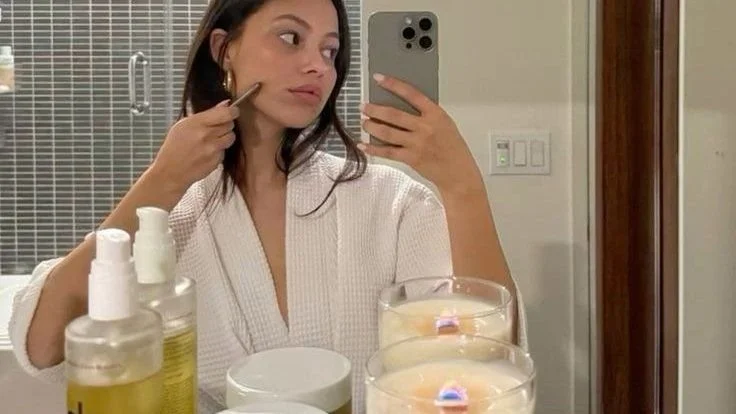
Yet clean girl beauty is not about “less.” It’s about control — controlled skin, controlled hair, controlled effort. Even the glow is intentional.
TikTok helped turn this aesthetic into a full lifestyle script: Pilates and matcha, tonal athleisure, a neutral wardrobe that suggests taste rather than trend-chasing. It’s what happens when wellness becomes a visual identity. And, as La Trobe University’s analysis of TikTok aesthetics notes, “clean girl” is sold as aspirational — achieved by “living the associated lifestyle” from the “inside out.”
But aspiration has a price tag.
Clean girl minimalism is almost always expensive: a “simple” face often requires elaborate skincare, and “natural” beauty becomes something you purchase through serums, skin tints, lip treatments, and curated routines. This isn’t a retreat from consumerism — it’s consumerism in a trench coat.
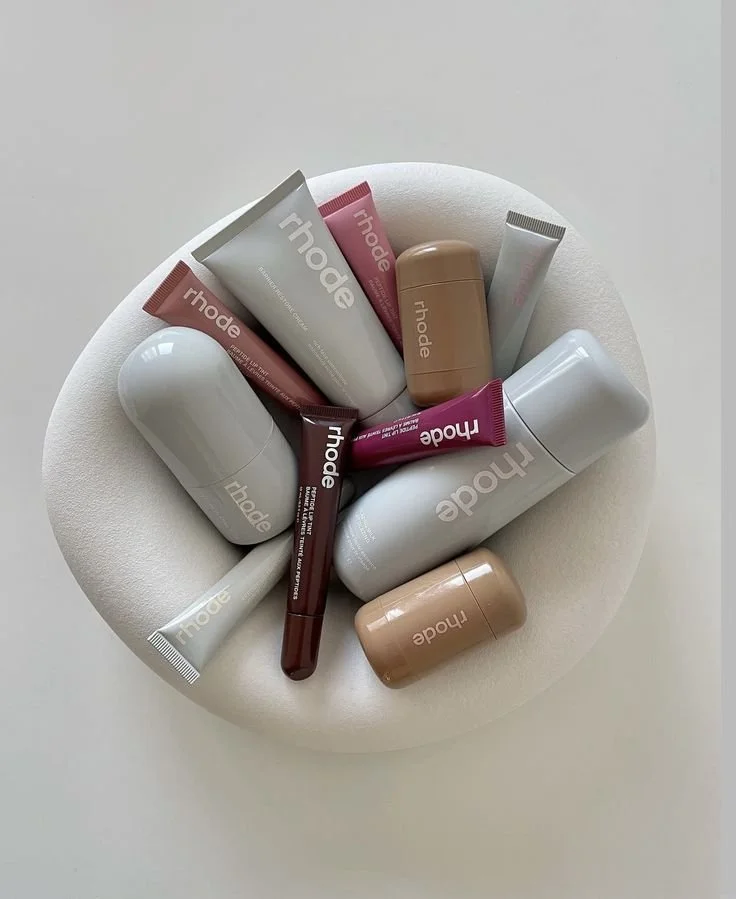
The brands understood that immediately. Rhode, led by Hailey Bieber, didn’t just reflect the clean girl era: it helped shape it. Bieber’s “glazed donut” language grew immensely on TikTok, attaching gloss, hydration, and neutrality to a new kind of desirability.
Then came the shelf. Or rather, the collection.
Drunk Elephant’s popularity among Gen-Alpha “Sephora kids” revealed something darker beneath the glow: the clean girl aesthetic’s “effortless” promise becomes a shopping list, and sometimes the shoppers are children holding products priced for adults.
And there’s another uncomfortable truth: “clean” is not a neutral word.
Critics have discussed how the aesthetic can slip into coded messaging — associating “clean” with thinness, whiteness, wealth, and controlled femininity. As one critique puts it, the clean girl ideal often reads as class signalling, where “clean” becomes a way to quietly declare who belongs in the “right” version of beauty.
Sofia Richie Grainge became one of the trend’s defining faces. A minimalism that doesn’t look bare, but curated. This is “clean” as quiet luxury: a taste that feels inherited rather than chosen.
So, is it still relevant?
Yes — but it’s evolving. Who What Wear suggests the aesthetic has matured into something less prescriptive and more personalised, no longer dominating TikTok the same way, but still shaping what’s considered “put together.” It hasn’t disappeared. It’s simply become the default setting.
Because in the end, clean girl beauty isn’t the rejection of glam. It’s glam with a softer voice — and a sharper edge.