Elegance Under Pressure: Moral Compromise and Survival in The New Look
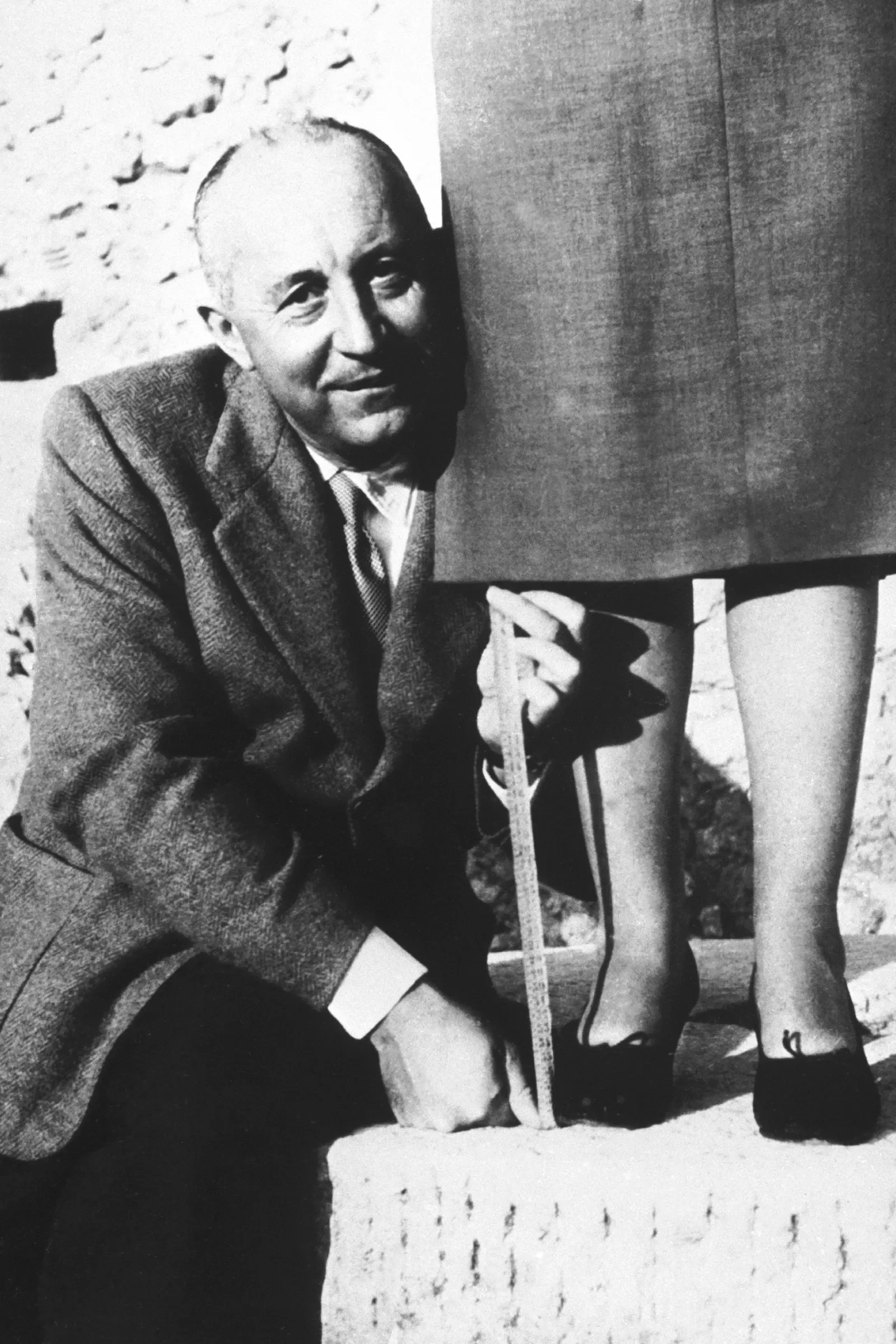
Christian Dior, who dropped hemlines, circa 1947.
Apple TV+’s The New Look has been criticised for narrowing the Second World War into a story about fashion — as if the Nazi occupation of Paris can be understood through couture houses and creative rivalries. It’s a fair concern. The series often keeps the wider horrors of the war at a distance, creating a world that can feel strangely insulated from history.
But what makes The New Look compelling isn’t its historical scope. It’s its fixation on moral compromise.
Rather than offering a clean division between heroes and villains, the show stays firmly in the grey. It’s less interested in who was “right” or “wrong” than in how people justified their choices while living under occupation. At its best, The New Look asks what it meant to keep creating beauty when the world around you was morally and politically rotten.
The series follows Coco Chanel and Christian Dior, moving between the 1950s and the wartime years. It opens with Chanel preparing a postwar comeback while Dior is celebrated as the new saviour of French couture, before rewinding to show how both navigated life under Nazi rule. Dior works at Lucien Lelong’s fashion house, designing for wealthy clients connected to the regime, while quietly supporting his sister’s involvement in the French Resistance. Chanel, meanwhile, closes her boutique, lives at the Ritz, and forms relationships with high-ranking German officers to protect her interests and regain control of her business.
The contrast is deliberate. Dior’s compromise is portrayed as reluctant and anxious; Chanel’s as calculated and unapologetic.
Juliette Binoche’s Chanel is sharp, imperious, and often deeply unlikeable, but she is never written as unaware. The series makes clear that Chanel understands how fragile power is — particularly for a woman who built her own empire in a male-dominated industry. For her, stepping away from fashion doesn’t mean rest; it means disappearance. Creativity becomes survival, and relevance becomes a form of protection.
What The New Look does well is frame Chanel’s collaboration as strategy rather than ideology. She is not depicted as a committed Nazi sympathiser, but as someone who knows how power operates and chooses proximity to it. The show does not excuse her actions, especially when it touches on her exploitation of antisemitic laws for personal gain. Still, it places those choices within a reality where ethical decisions were rarely simple and often dangerous.
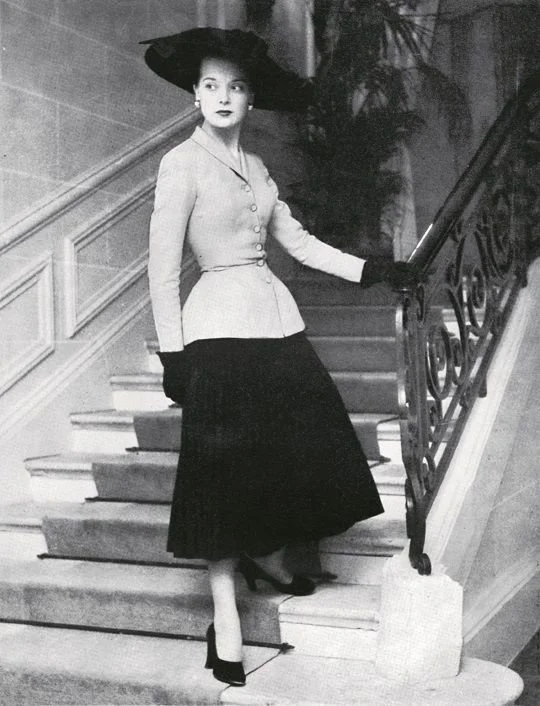
Photographed by Serge Balkin, Vogue, April 1, 1947
Christian Dior’s moral dilemma is treated more gently. Ben Mendelsohn plays him as hesitant and soft-spoken, a man who convinces himself his compromises are temporary. His work for Nazi-connected clients is softened by his fear for his sister and his indirect ties to the Resistance. The contrast raises uncomfortable questions: passive compromise is framed as tragic necessity, while strategic self-interest is condemned — even when both unfold within the same corrupt system.
The show’s limitations remain difficult to ignore. The persecution and deportation of Jewish people, in particular, remain largely off-screen, giving the narrative an unsettling sense of polish. Still, within its narrow focus, The New Look offers something valuable. It presents fashion not as an escape from history, but as a space where ambition, survival, and moral failure are tightly stitched together — reminding us that creating beauty in a corrupt time is never neutral.