Styled for Suspicion: The Visual Politics of Crime
Crime has always had a dress code. Long before a case reaches a courtroom, the public has already begun to assemble a visual narrative about the person accused. A hoodie, a pair of sagging jeans, a baseball cap pulled low over the face—these items can function almost like evidence in the court of public opinion. Fashion, in this sense, does not simply reflect identity; it shapes how guilt and innocence are imagined. In media images, surveillance footage, and mugshots that circulate online within minutes of an arrest, clothing becomes shorthand for character. The result is that criminality is often read through style before facts ever enter the conversation.
The stereotype of the criminal body is not accidental, nor is it purely aesthetic. It has been built over centuries through visual culture, policing practices, and racialized assumptions about who appears threatening. In the United States, particularly, clothing associated with Black communities—hoodies, streetwear silhouettes, low-slung trousers, certain athletic brands—has repeatedly been framed as suspicious or deviant. Fashion theorists and criminologists have pointed out that garments frequently become symbols through which societies construct fear. What someone is wearing can quickly be interpreted as evidence of intent, rebellion, or danger. This dynamic is especially visible in how Black men are perceived in public spaces, where clothing that might be read as casual or fashionable on one body can be interpreted as threatening on another.
These visual judgments are not harmless social impressions; they have measurable consequences. Data from the NAACP indicates that Black individuals are stopped by police at significantly higher rates than white individuals, often without just cause. A Black person is five times more likely to be stopped without justification, and roughly 65 percent of Black adults report feeling that they have been targeted because of their race. Clothing frequently plays a role in these encounters. Something as simple as a hoodie, athletic wear, or street-style clothing can trigger suspicion in contexts where fashion becomes conflated with criminality.
Researchers studying what psychologists call the “criminal stereotype” have found that people carry deeply ingrained visual templates of what a criminal looks like. Race, facial features, and clothing influence these templates. Studies examining the presumption of dangerousness associated with Afrocentric facial features demonstrate that individuals with darker skin tones or features culturally associated with Blackness are more likely to be perceived as threatening—even when observers are given identical information about a situation. When fashion elements associated with Black culture enter the equation, the stereotype intensifies. The clothing itself becomes part of the narrative of suspicion.
Psychological research further demonstrates how deeply clothing can influence perception. In a study conducted by forensic psychologists Aldert Vrij and Lucy Akehurst at the International Centre for Research in Forensic Psychology, observers were shown a video testimony from a victim of sexual harassment whose clothing varied between black and lighter garments. The findings revealed what researchers described as the “black clothing stereotype.” Participants consistently perceived the individual wearing black clothing as more aggressive and less trustworthy than the same individual wearing lighter clothing. The stereotype appeared across all groups of observers, suggesting that clothing color alone can subtly shape impressions of honesty, aggression, and intent. Even without any behavioral change, clothing influenced how credibility and morality were judged.
Fashion theory has increasingly examined how clothing participates in the construction of deviance, but in practice, the relationship between style and suspicion is often far more immediate and visible than theory alone suggests. As Joanne Turney argues in Fashion Crimes: Dressing for Deviance, garments themselves frequently become moral signifiers through which societies enforce boundaries of acceptable behavior. Hoodies, trench coats, low-slung trousers, or specific subcultural aesthetics have periodically been framed as markers of criminality despite having no inherent connection to illegal activity. Turney’s research illustrates how clothing operates as a form of social language, encoding assumptions about class, rebellion, and conformity. When garments become associated with deviant identities, they function as visual shorthand through which fear and suspicion can be organized. Fashion, therefore, does not simply reflect cultural anxieties about crime; it actively produces and reinforces them.
This dynamic becomes particularly visible when race enters the equation. Clothing associated with Black culture—streetwear silhouettes, athletic apparel, hooded sweatshirts—has repeatedly been framed within American media and policing narratives as suspicious or threatening. These interpretations are rarely neutral. They emerge from longstanding stereotypes that link Black identity, urban fashion, and criminality. A hoodie on one body can signal casual comfort; on another, it can trigger suspicion. The garment becomes a visual cue through which observers project assumptions about danger. Fashion, in this sense, becomes part of a racialized surveillance system operating in public space.
During a lecture examining the intersection between clothing, crime, and perception at University of the Arts London and Central Saint Martins, design researcher Lorraine Gamman described clothing as part of a broader system of visual categorization operating in everyday life. “We constantly read people through objects and clothing,” she explained during the discussion. “Dress can become a shorthand through which people decide who belongs, who is respectable, and who appears suspicious.”
Fashion journalist Corinna Brabazon expanded on this idea during the same lecture. “Clothing has always been one of the easiest ways for societies to identify who belongs and who does not,” she explained. “Once a garment becomes associated with deviance, it can communicate fear instantly.”
Yet clothing is interpreted as moral evidence not only when the accused are Black or marginalized, but also when victims are judged through appearance. The global “What Were You Wearing?” exhibitions confront one of the most pervasive myths surrounding sexual violence: the idea that clothing provokes assault. These exhibitions display outfits worn by survivors at the time they were attacked—often consisting of ordinary garments such as jeans, sweaters, school uniforms, or pajamas. The effect is striking precisely because the clothing appears so mundane. The exhibition dismantles the assumption that fashion somehow invites violence and exposes how appearance is frequently misinterpreted as a signal of consent or provocation. The persistent question—“What were you wearing?”—reveals how deeply societies treat clothing as an indicator of moral character, even when it has no relationship to the crime itself.
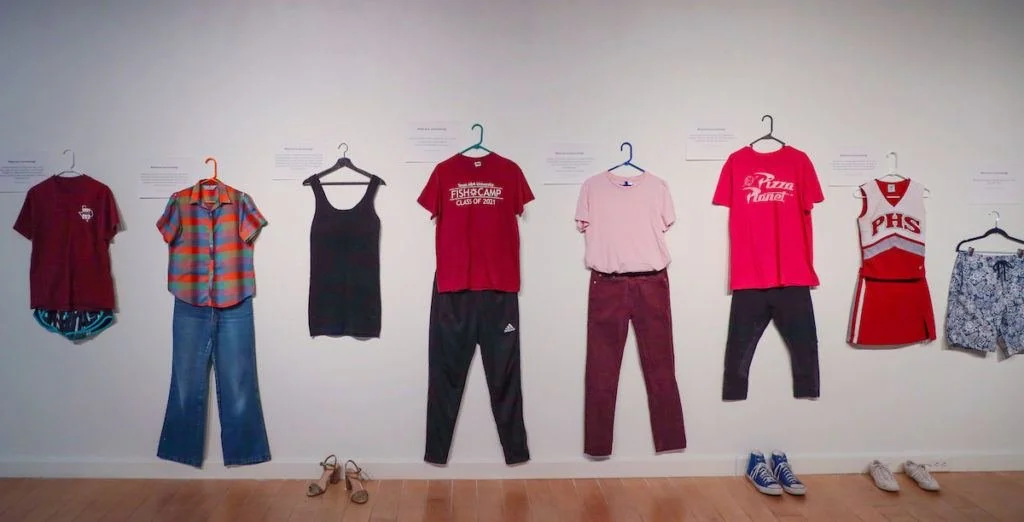
(What were you wearing exhibit, Texas 2019)
The cultural fixation on appearance becomes even more complex when applied to the accused rather than the victim. In recent years, the phenomenon often referred to as the “hot criminal” has demonstrated how attractiveness and personal style can radically reshape public perception of alleged offenders.
The viral fame of Jeremy Meeks illustrates this transformation vividly. When Meeks was arrested in 2014 during a gang sweep in Stockton, California, police charged him with five felony weapon counts, including possession of a firearm by a felon, along with a street terrorism charge connected to alleged gang activity. His criminal record already included previous convictions, including grand theft in 2002 and a 2007 conviction for forgery. Prior to the 2014 arrest, he had also served a lengthy prison sentence for theft that kept him incarcerated for several years during the 2000s.
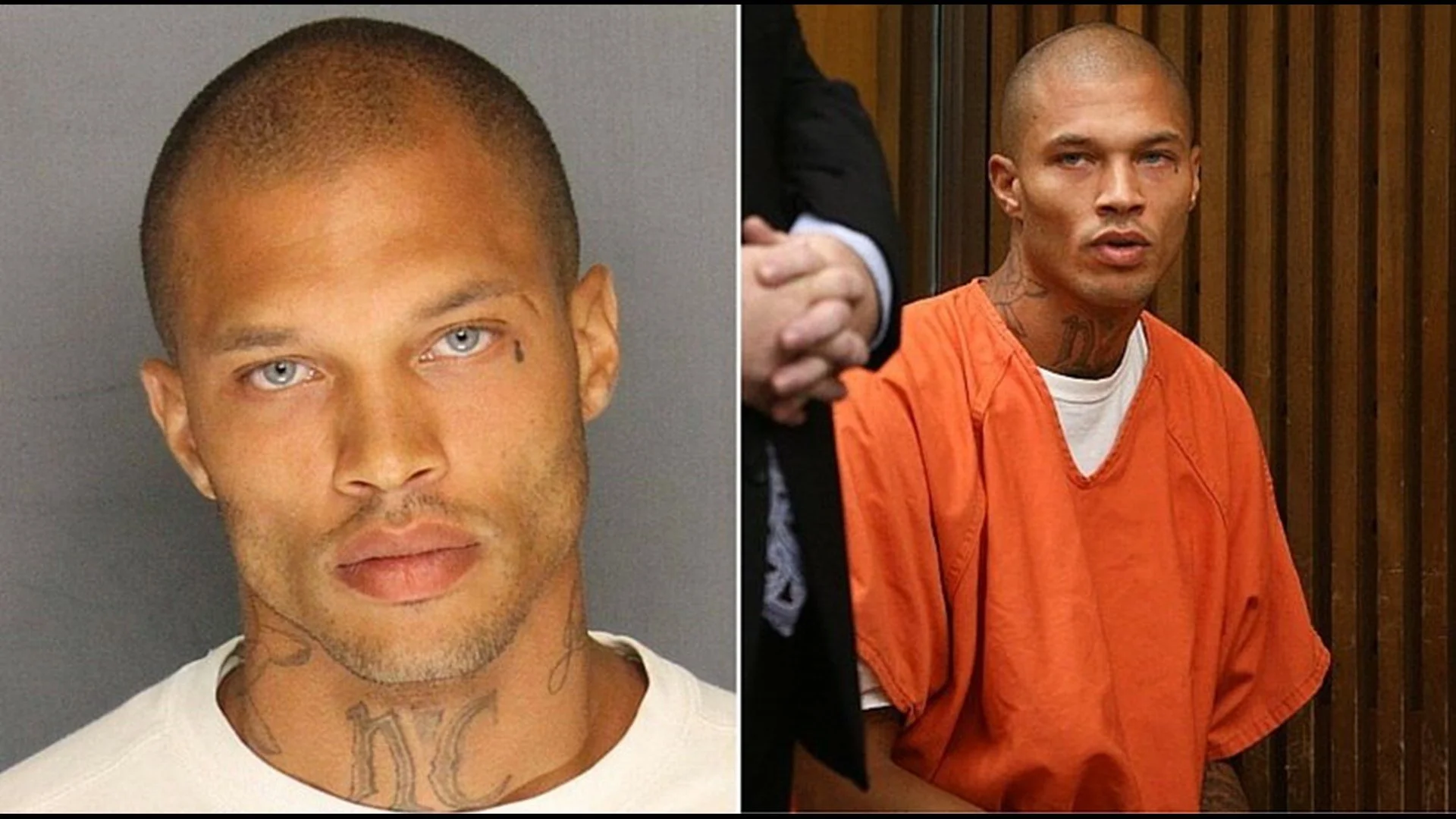
(Jeremy Meeks Mugshot 2014)
Yet when the Stockton Police Department posted Meeks’s mugshot on Facebook, the legal details of the case were quickly overshadowed by something else entirely: his appearance. The image—showing Meeks with piercing blue eyes, symmetrical features, and a composed expression framed by a carefully groomed fade haircut—spread across the internet with extraordinary speed. The mugshot received more than 100,000 likes and was shared over 12,000 times within days. Instead of focusing on the charges, online commentary fixated on his looks. Headlines across outlets, including CNN, BBC, People, E! News, Daily Mail, and The Sun, repeatedly used the phrase “hot criminal,” often dedicating more attention to his facial structure and style than to the allegations themselves.
The reaction revealed something deeper than a viral internet crush. Meeks’s image disrupted the long-standing visual stereotype of criminality. Rather than appearing threatening or disheveled—the archetype often associated with mugshots—he looked composed, fashionable, and conventionally attractive. His sharply groomed haircut, confident posture, and almost editorial-quality photograph transformed what should have been a record of arrest into something resembling a modeling headshot. The mugshot itself began circulating less as documentation of a crime and more as a visual object of fascination.
Even while serving his sentence for firearm possession, Meeks’s image continued to circulate online, drawing attention from fashion agencies and photographers. When he was released from prison in March 2016, he quickly signed a modeling contract and began appearing in fashion campaigns and runway shows. Within a short time, he was attending events in London, including a party celebrating his first magazine cover shoot for the British publication Man About Town. The trajectory—from gang-related arrest to international fashion magazine cover—was almost unprecedented.
What made the case particularly revealing was the language used to describe him. Across hundreds of articles, the phrase “hot criminal” appeared repeatedly, sometimes even in headlines, reducing the crime itself to a secondary detail. The emphasis on his appearance suggested that something more complex was happening culturally. The public fascination with Meeks seemed to demonstrate how quickly the narrative surrounding criminality can shift when aesthetics intervene. If criminal stereotypes are built around visual cues—race, clothing, grooming—then Meeks’s case showed how those cues can also be inverted. His polished appearance complicated the narrative of deviance.
The question that lingered in the wake of the phenomenon was uncomfortable but difficult to ignore: Can appearance soften the perception of crime?
As Brabazon reflected during the lecture, the answer may lie in how strongly society relies on visual stereotypes in the first place. “We like to imagine that criminality is something visible,” she said. “It reassures us to believe danger has a recognizable face or style. But the moment someone who appears respectable commits a crime, that stereotype collapses.”
She posed an even more unsettling question during the discussion: “What happens when the criminal is like us—and likeable?”
The transformation of criminal imagery into marketable aesthetics is not entirely new. During the 1930s, outlaw couple Bonnie Parker and Clyde Barrow cultivated a carefully staged visual identity that contributed significantly to their mythologization. Photographs of Parker posing with cigars and firearms circulated widely in newspapers, presenting the pair not only as criminals but as rebellious style figures. Their tailored suits, dresses, hats, and accessories helped craft a narrative of glamorous outlawry that still shapes popular culture today.
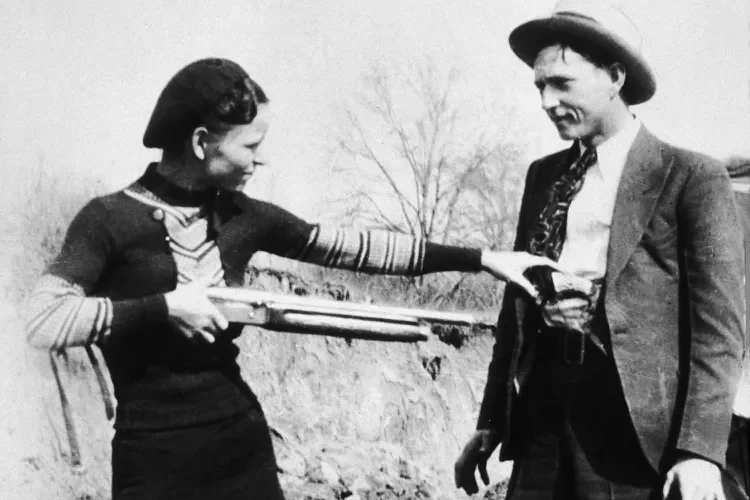
(Bonnie & Clyde, 1933)
Even more disturbing examples exist, and perhaps none illustrate the danger of aesthetic perception more clearly than the case of Serial killer Ted Bundy. He managed to evade suspicion for years in part because he did not resemble the cultural image of a violent predator. Bundy appeared polished, educated, and conventionally attractive—an image reinforced by his clothing. Photographs from the 1970s frequently show him dressed in conservative attire typical of the era: collared shirts, fitted sweaters, and tailored jackets that reflected the clean-cut, middle-class aesthetic associated with professionalism and trustworthiness. His style aligned closely with the visual language of respectability—something that helped him move through social environments without immediately raising alarm. At a time when popular imagination often associated violent criminals with visibly rough or disheveled appearances, Bundy looked like the opposite: a law student, a campaign volunteer, a man who blended easily into everyday American life.
That appearance mattered. Bundy often used his presentation to gain the trust of victims and bystanders, sometimes wearing casts or posing as an injured professional to appear vulnerable or respectable. The contrast between his outward image and the brutality of his crimes created a disturbing cognitive gap for the public. Even during his trial, media coverage frequently commented on his charisma and appearance, sometimes framing him as “charming” or “handsome”—language rarely applied to individuals accused of similar crimes who do not fit conventional beauty standards. Decades later, this fascination persists. Documentaries, articles, and even online videos continue to dissect Bundy’s style—from his neatly combed hair and fitted knitwear to the courtroom suits he wore during his trial—treating his wardrobe almost as a cultural curiosity.
What makes Bundy’s case particularly unsettling is that the focus on his appearance repeatedly overshadowed the scale of his crimes. By the time he was finally apprehended and convicted, Bundy had confessed to dozens of murders committed across multiple states, with investigators believing the true number could be even higher. Yet public discourse often lingered on how someone who “looked like that” could be capable of such violence. His conventional style—clean, collegiate, and understated—helped destabilize the stereotype of the monstrous criminal. In doing so, Bundy exposed one of the most dangerous myths surrounding criminality: the belief that evil should be visually recognizable. His case demonstrates how easily appearance can obscure reality, reminding us that fashion and grooming can influence perception even in the most extreme cases of violence.
The contemporary media environment amplifies these dynamics through the mechanics of virality. Images of suspects circulate across digital platforms where engagement is driven by novelty, spectacle, and aesthetic appeal. Attractive defendants frequently receive disproportionate attention because their appearance disrupts expectations about criminal identity.
In recent years, the courtroom appearances of Luigi Mangione have become a striking example of how fashion can influence the narrative surrounding an alleged crime. Coverage from outlets such as The New York Times, BBC, and Women's Wear Daily analyzed Mangione’s courtroom wardrobe almost as closely as the legal proceedings themselves. Tailored suits, loafers worn without socks, carefully styled sweaters, and relaxed silhouettes became part of the global conversation surrounding the case. Images of Mangione entering court circulated widely online, prompting commentary not only about the charges but about his personal style.
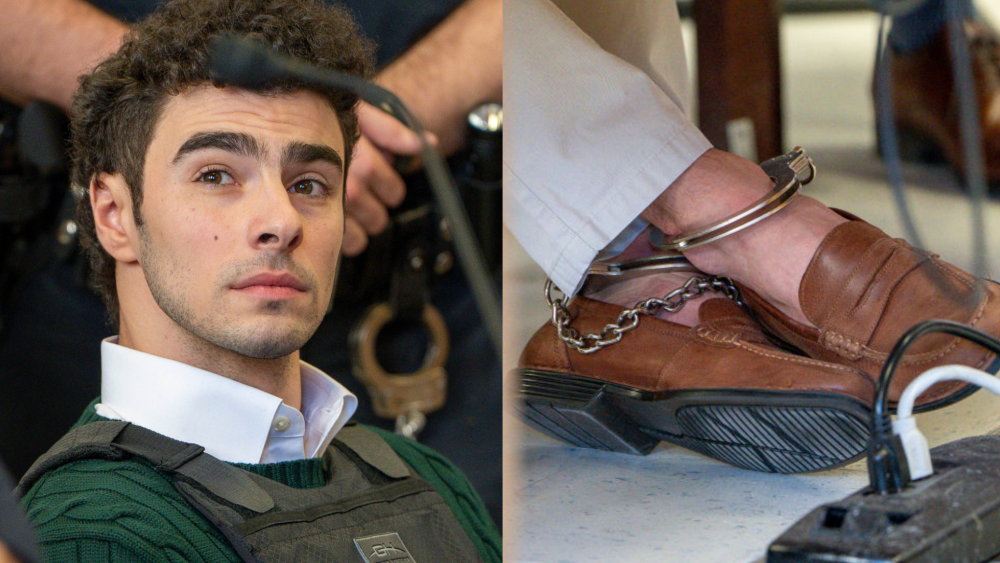
(Luigi Mangione photographed in Court, 2025)
The reaction was striking. Across social media platforms, viewers debated the meaning of his clothing choices, sometimes expressing sympathy or fascination that had little to do with the legal facts of the case. Fashion commentators noted the deliberate styling of Mangione’s outfits, which often balanced formality with an understated casualness—rolled sleeves, visible ankles, minimalist tailoring. These aesthetic choices transformed courtroom appearances into visual events that audiences consumed almost like fashion coverage. Whether intentionally or not, Mangione’s style contributed to the public narrative surrounding the case. His clothing humanized him, rendering him relatable to viewers who might otherwise have interpreted the story through a more conventional criminal lens.
The influence of clothing in such moments becomes even clearer when one considers the formal expectations surrounding courtroom attire itself. Although courts rarely impose rigid fashion rules, there is an implicit dress code embedded within the institution. Guidance from the UK government notes that individuals should dress “smartly” when attending court and that head coverings are generally not permitted unless worn for religious reasons. In the United States, courthouse guidelines similarly suggest business attire out of respect for the court, advising visitors not to wear hats and to maintain a professional appearance. These recommendations may appear straightforward, yet the phrase “dress smartly” carries enormous interpretive weight. What counts as respectable clothing often depends on class, culture, and personal style. For defendants, the courtroom becomes a space where clothing functions as silent testimony about character.
Legal teams understand this dynamic well. Defendants are frequently encouraged to wear suits, neutral colors, and conservative accessories to convey responsibility and credibility. A tailored jacket or polished shoes can subtly influence how jurors perceive the individual standing trial. Clothing becomes a strategic tool of impression management, shaping the emotional atmosphere of the courtroom before a single word of testimony is heard. The courtroom, in this sense, operates not unlike a stage. Appearance becomes part of the performance through which character is interpreted.
The spectacle surrounding courtroom fashion is not limited to Mangione’s case. Another widely discussed example is Anna Delvey, whose real name is Anna Sorokin. Even while facing charges for financial crimes—and later appearing on television while under house arrest—Delvey carefully curated her wardrobe. During her trial, she wore carefully styled outfits reportedly assembled with the assistance of a stylist, transforming courtroom appearances into fashion commentary. Years later, while participating in the television program Dancing with the Stars under house arrest conditions, Delvey continued to cultivate a distinctive aesthetic identity. Her outfits, ankle monitor included, became a subject of fascination in their own right.
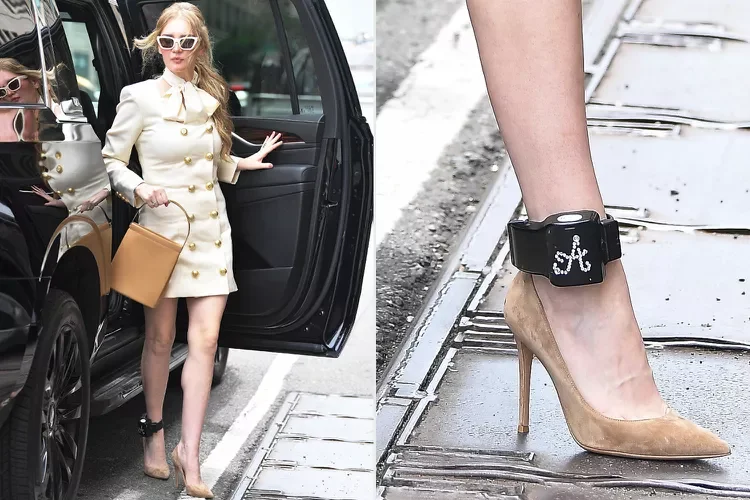
(Anna Sorokin New York, 2024)
These examples illustrate a striking contradiction. Society maintains a strong visual stereotype of what criminals are supposed to look like—dangerous, disheveled, visibly threatening. Yet reality reveals a far broader spectrum. Criminals can appear elegant, fashionable, charismatic, or ordinary. When this happens, public perception becomes unsettled. The visual narrative of criminality no longer aligns with cultural expectations.
This dissonance exposes how deeply those expectations are shaped by bias. When marginalized individuals are associated with styles coded as “dangerous,” their clothing can reinforce existing stereotypes about criminality. When more privileged defendants appear stylish or attractive, fashion can soften public perception and even generate fascination. The difference lies not in the garments themselves but in the social narratives attached to them.
Fashion, therefore, occupies a powerful position within the cultural economy of crime. The clothes worn in courtrooms, displayed in exhibitions, and circulated through viral images influence how individuals are perceived, judged, and remembered. In a media environment driven by images, clothing becomes part of the story itself.
The courtroom may be a site of legal judgment, but it is also a space of visual interpretation. A suit can signal respectability, a hoodie can trigger suspicion, and a carefully styled outfit can transform a defendant into a cultural figure. Fashion does not determine guilt or innocence—but it undeniably shapes how society sees those who stand accused.