Have We Lost the Plot? A Love Story in the Age of Performance
There is a peculiar loneliness to modern dating — not the aching, cinematic kind, but something flatter, more fluorescent. The loneliness of too many rules, too much advice, too many eyes watching. Romance, once chaotic and intimate, now arrives pre-packaged with captions, disclaimers, and a soft launch.
We are told this is progress. We are told this is empowerment. And yet, many of us feel an almost unspeakable confusion — a quiet grief for a language of intimacy we no longer seem fluent in.
Dating today does not unfold; it performs.
Somewhere between the third date rule and the three-month rule, between “don’t text back too fast” and “never let them know you care,” desire has been replaced by choreography. TikTok has become a shadow chaperone, whispering strategies into our ears while siphoning the spontaneity out of our gestures. Attraction is no longer something that happens to us — it is something we manage, optimize, and with alarming regularity, sabotage.
We have turned connection into a concept.
The situationship — that liminal purgatory of romantic non-commitment — is often framed as modern, liberated, low-pressure. In reality, it is commitment anxiety in couture. A relationship stripped of its nouns, surviving only on verbs: hanging out, staying over, talking every day, never naming the thing itself.
The situationship thrives on plausible deniability. It allows people to reap the emotional benefits of closeness while preserving the ego’s escape hatch. No promises, no expectations — just enough intimacy to keep hope breathing, not enough to let it live.
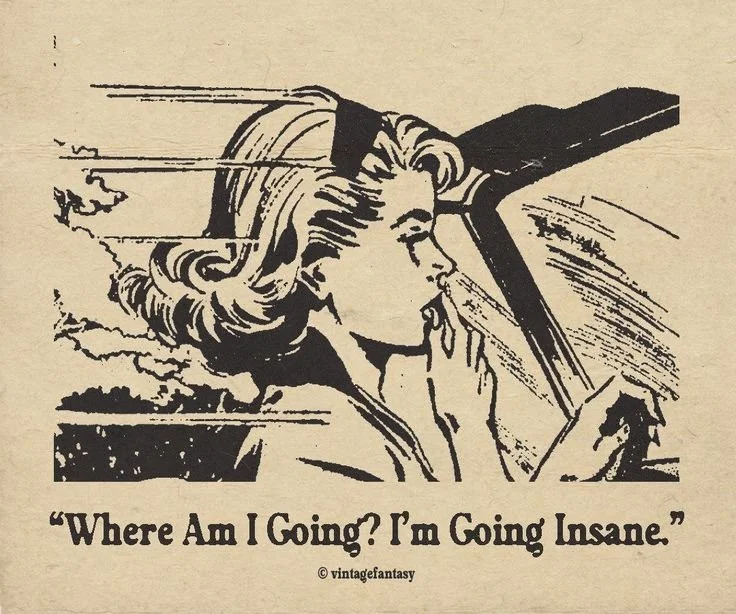
It is romantic ambiguity dressed up as emotional sophistication. And it leaves people, often women, performing resilience while quietly absorbing the erosion of certainty. Strength, here, becomes endurance. Fragility becomes something to be concealed, never tended.
Meanwhile, the language of dating has curdled. Women are “bops,” “mid,” “chopped” — slang tossed off with ironic detachment, as if cruelty delivered casually does not still bruise. These words flatten women into aesthetics, into trends, into things that can be ranked, dismissed, scrolled past.
It is not that such language is new; it is that it is now ambient. It hums beneath conversations, seeps into group chats, circulates without resistance. Even when said jokingly, it reinforces a culture where women are evaluated as products and men are encouraged to commentate rather than connect.
The irony, of course, is that this aestheticization of women’s bodies coincides with a growing obsession with women’s “fragility.” As if vulnerability were not a reasonable response to being constantly surveilled, assessed, and reduced.
Men, too, are flailing — though the script tells them they must never admit it.
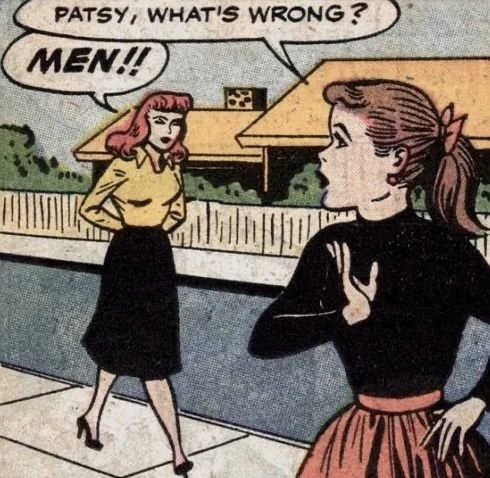
Modern masculinity is caught between parody and punishment. Be stoic, but emotionally intelligent. Be dominant, but gentle. Be nonchalant, but attentive. Want her, but don’t need her. Care, but never too much — caring is now a liability, a social faux pas.
Thus emerges the performative male: curated detachment, strategic silence, interest rationed like a scarce resource. Social media teaches men not how to relate, but how to withhold. How to appear unbothered. How to “win” by seeming least invested.
But nonchalance is not confidence — it is often fear in better lighting.
The result is a dating culture where both parties are braced for impact, interpreting every pause, every delayed reply, every tonal shift as data. Romance becomes a surveillance operation. Vulnerability feels reckless. Desire must be plausible, deniable, and ideally invisible.
Into this confusion steps TikTok — benevolent, algorithmic, and utterly unconcerned with nuance. A new priesthood of dating experts dispenses wisdom in 30-second bursts: repeat their name to create intimacy, mirror their texting pace, disappear to increase desire. Love, reduced to behavioral psychology for beginners.
The appeal is obvious. In an uncertain emotional economy, people crave structure. Rules promise safety. Scripts promise control.
But relationships are not experiments, and people are not rats in a maze. Advice that encourages manipulation over communication does not foster intimacy; it corrodes it. It trains people to perform interest rather than feel it, to test affection rather than express it.
The more dating becomes something we do correctly, the less it becomes something we experience honestly.
Layered over all of this is the commodification of desire itself. Attention is currency. Intimacy is content. Platforms blur the line between flirtation and marketing, between connection and consumption.
Snapchat becomes a low-stakes intimacy simulator — disappearing messages, curated vulnerability, effort without accountability. OnlyFans, meanwhile, exists as both empowerment and indictment: a reminder that sexuality, when stripped of emotional reciprocity, is often easier to monetize than to navigate relationally.
None of this exists in a vacuum. It all feeds into a culture where desire is abundant but intimacy is scarce — where everyone is visible, yet few feel truly seen.
Perhaps the quietest tragedy of all is the erosion of basic social courage. Asking someone out without irony. Expressing interest without a safety net. Accepting rejection without outsourcing blame to “the algorithm” or “dating culture.”
We have confused emotional literacy with emotional distance. We speak fluently about boundaries but struggle with closeness. We analyze attachment styles while avoiding attachment itself.
We are hyper-aware, over-informed, and deeply disconnected.
So, Have We Gone Mad?
Not mad — but misled. Over-coached. Exhausted by the performance of it all.
Dating was never meant to be this self-conscious. Desire was never meant to be crowdsourced. Love, historically speaking, has always been messy, embarrassing, inefficient. That was the point.
What we’ve lost is not romance itself, but our tolerance for its uncertainty. Our willingness to look foolish. Our capacity to say, plainly and without strategy: I like you. I don’t know where this is going. But I am here.
Perhaps the rebellion now is sincerity. Perhaps the most radical act in modern dating is to opt out of the performance — to risk being earnest in a culture that rewards detachment.
It may not go viral.
But it might actually feel like something.